Senate Leader John Thune Warns FISA Expiration Could Threaten U.S. National Security
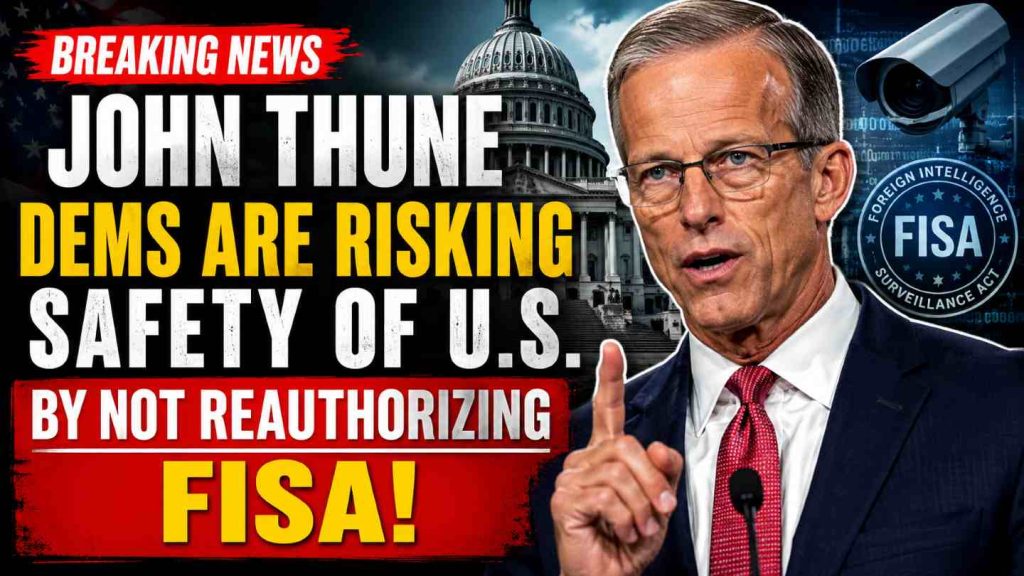
Senate Leader John Thune Warns FISA Expiration Could Threaten U.S. National Security
Republicans Push for Renewal of Key Surveillance Program as Deadline Nears
Senate Republican Leader John Thune has issued a strong warning about the potential consequences of failing to reauthorize the Foreign Intelligence Surveillance Act (FISA), arguing that allowing the program to expire would significantly weaken America’s national security capabilities.
Speaking during a press briefing on Capitol Hill, Thune emphasized that Section 702 of FISA remains one of the federal government’s most important intelligence-gathering tools. He criticized Senate Democrats for opposing the legislation, saying their position could leave the United States vulnerable to terrorist threats and criminal organizations.
Thune Highlights FISA’s Track Record
According to Thune, the surveillance program has played a critical role in protecting the nation for years. He pointed to numerous instances where intelligence gathered through Section 702 helped prevent terrorist attacks and disrupt criminal enterprises involved in the trafficking of synthetic drugs.
“If national security isn’t handled correctly, everything else becomes secondary,” Thune said, stressing that the intelligence authority has consistently delivered results for U.S. law enforcement and intelligence agencies.
The South Dakota senator noted that a significant portion of intelligence used in drug interdiction operations originates from information obtained through the Section 702 process.
Midnight Deadline Raises Urgency
Congress faces a looming deadline as the current authorization for the program is set to expire at midnight Friday unless lawmakers take action.
Thune argued that the timing could not be worse. The United States is preparing to host several major international events in the coming years, including FIFA World Cup matches and celebrations marking the nation’s 250th anniversary.
With millions of visitors expected to travel to the country, Thune said intelligence agencies need access to every available resource to identify and stop potential threats before they occur.
“The program has a proven record of keeping Americans safe,” he said. “Allowing it to lapse would be a dangerous mistake.”
Debate Continues Over Reforms
While Republicans have largely united behind the reauthorization effort, some Democrats have expressed concerns about privacy protections and government surveillance powers.
Thune pushed back against those concerns, noting that lawmakers from both parties have spent months working on a package of reforms designed to improve oversight and accountability within the program.
He argued that the current proposal includes substantial changes intended to address concerns raised by critics while preserving the intelligence capabilities that security officials consider essential.
According to Thune, the legislation reflects bipartisan work conducted in both the House and Senate and should receive broad support.
Questions on Senate Procedure and Election Legislation
During the press conference, Thune also addressed questions regarding election-related legislation, including the SAVE Act.
He reiterated that while many Republicans support voter identification requirements and citizenship verification measures, the Senate currently lacks the votes needed to advance the legislation.
Thune explained that Senate rules require 60 votes for most legislation, and there is insufficient support to overcome that threshold. He added that eliminating the legislative filibuster is not an option because there are not enough votes within the Senate to do so.
Foreign Policy Challenges Remain a Focus
Beyond domestic security concerns, Thune discussed several international issues currently facing the United States.
On Iran, he expressed support for diplomatic and strategic efforts aimed at preventing Tehran from obtaining nuclear weapons. He described ongoing negotiations and military planning as crucial to maintaining stability in the Middle East.
Thune also voiced strong support for Taiwan, saying the United States should continue helping the island strengthen its defenses against potential aggression from China.
“We want to do everything possible to ensure Taiwan can defend itself,” he said.
DNI Nomination Could Impact Negotiations
Another issue discussed during the briefing involved the lack of a permanent Director of National Intelligence (DNI).
Thune acknowledged that some Democrats have linked support for FISA reauthorization to the administration’s handling of the DNI nomination process. While he supports naming a permanent intelligence chief, he argued that the two issues should remain separate.
He said reauthorizing FISA should be treated as an urgent national security matter regardless of ongoing political disputes over executive branch appointments.
Pressure Builds as Congress Faces Decision
As the deadline approaches, lawmakers continue negotiations in hopes of reaching an agreement before the surveillance authority expires.
Thune maintained that preserving Section 702 is essential for protecting Americans from foreign threats and ensuring intelligence agencies can continue gathering information needed to safeguard the country.
With time running short, the Senate faces increasing pressure to resolve differences and determine the future of one of the nation’s most significant intelligence programs.
#JohnThune #FISA #Section702 #NationalSecurity #USPolitics #Congress #SenateNews #BreakingNews #Intelligence #CounterTerrorism